
Elon Musk, Warren Buffett, and Jeff Bezos rank among the wealthiest Americans ever. Like many ultra-rich investors, they hold most of their wealth in stocks.
But a new wave of stock market volatility might be prompting today’s rich, young investors to take a different approach.
According to the 2026 Bank of America Private Bank Study of Wealthy Americans, individuals aged 21 to 45 with at least $3 million in assets allocate just 32% of their portfolio to stocks, compared to 58% for wealthy investors older than 45.
67% of younger investors say traditional stocks and bonds can no longer deliver above-average returns — and 88% say they’re likely to increase their exposure to alternatives in the coming years, compared to just 15% of older investors.
So, which alternative investments are actually winning their attention and their money?
A golden opportunity to hedge against inflation
According to the survey, 41% of Gen Z/Millennial investors currently own physical gold, and another 51% are interested in holding it.
Historically, gold has served as a hedge against inflation and market volatility. Many investors turn to “safe haven” assets like gold during economic and geopolitical instability to preserve their wealth.
Gold has surged roughly 153% over the past five years, climbing to a record high above $5,500 in January 2026 before pulling back sharply — and it’s since rebounded, recently touching a multi-month high.
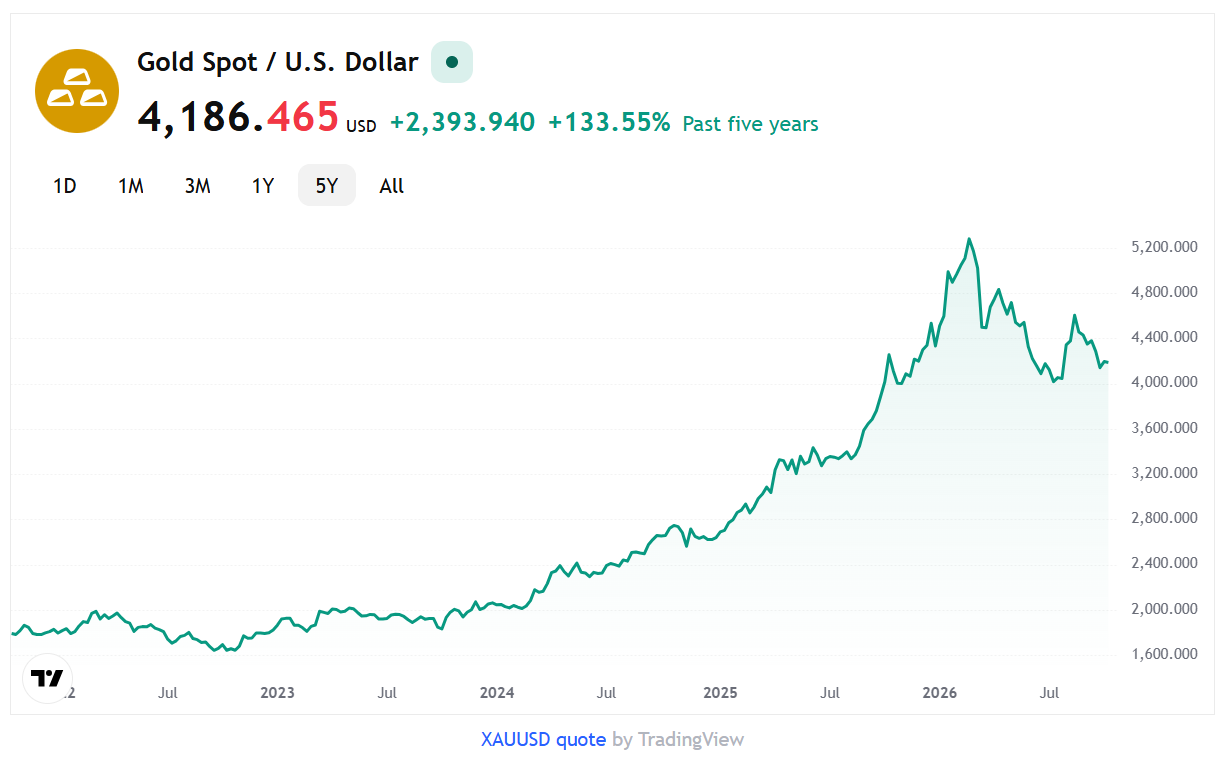
There are many gold assets to choose from, including gold bars, coins, and gold stocks.
One way to invest in gold that also provides significant tax advantages is to open a gold IRA.
A gold IRA allows you to directly invest in physical gold or gold-related assets within your retirement portfolio, pairing the tax advantages of an IRA with gold’s track record as a long-term store of value. For investors concerned about inflation or economic instability, it’s one way to add a layer of protection to your retirement savings.
There are specific rules around gold IRAs, and some states have different tax structures for the sale of gold and silver. It’s important to choose the right dealer and custodian to help you navigate regulatory and taxation hurdles.
Some companies also offer incentives, such as free IRA rollovers or free precious metals. Priority Gold, for instance, offers up to $10,000 in free silver on qualifying purchases.
If you’re curious whether this is the right investment to diversify your portfolio, you can download a free gold and silver information guide.
Real estate: rich with opportunity
Real estate has long been considered a solid portfolio hedge, as rent and property values tend to increase with inflation. It’s no surprise that high-net-worth individuals — regardless of their age — see opportunity in this asset.
50% of Gen Z/Millennial investors already own investment real estate — the most widely held alternative asset among younger investors — with another 44% interested, according to the 2026 Bank of America Private Bank Study of Wealthy Americans. Federal Reserve data also shows that the top 1% of Americans hold over $6 trillion in real estate assets.
But if you want to avoid a hefty down payment and the burden of property management, there are new platforms that make it easier to tap into this lucrative market.
Mogul, for instance, is a real estate investment platform that offers fractional ownership in blue-chip rental properties, which gives investors monthly rental income, real-time appreciation and tax benefits without the need for a $250,000 down payment or 3 A.M. tenant calls.
Founded by former Goldman Sachs real estate investors, the team hand-picks the top 1% of single-family rental homes nationwide for you. Simply put, you can invest in institutional-quality offerings for a fraction of the usual cost.
Across the board, the platform features an average annual IRR of 18.8%. Their cash-on-cash yields, meanwhile, average between 10-12% annually.
Each property undergoes a vetting process, requiring a minimum 12% return even in downside scenarios.
With numbers like that, it’s no wonder that offerings sell out in under three hours — with investments typically ranging between $15,000 and $40,000 per property.
Another way to tap into the real estate market is through private funds.
For example, the Fundrise Flagship Fund¹ is a $1 billion private real estate fund that lets you invest in an expertly crafted strategy without needing hundreds of thousands of dollars. You don’t need to be an accredited investor, and you can get started with as little as $10.
With 4,700+ single-family homes and 2,500+ residential units owned by the Fundrise Flagship Fund, you get exposure to institutional-style scale and diversification.
After you place your first investment, the Fundrise Flagship Fund will work to find and add new assets to your portfolio over time and send you transparent updates along the way.
Private markets: diversification beyond real estate and gold
Real estate isn’t the only door that’s opened up to everyday investors. Asset classes long reserved for institutions and family offices are increasingly available to individual investors too.
Willow Wealth gives investors access to a full range of them from a single account — private real estate, private equity, private credit, art and litigation finance — either hand-picking your own investments or letting a managed portfolio do the allocating for you.
Minimums start at just $5,000, with fees that typically range from 1% to 4% depending on the offering, putting institutional-style diversification within reach.
Finding the right asset mix
Whether it’s gold or real estate, determining the right mix of assets for your portfolio isn’t one-size-fits-all.
If you’re just starting to diversify beyond stocks, an automated, low-cost approach can help you build exposure without a large minimum or a big fee.
A low-cost robo advisor such as Vanguard’s Digital Advisor puts the investing expertise of one of the world’s largest asset managers right at your fingertips.
It takes the guesswork out of investing by building a personalized portfolio for you using Vanguard’s well-known low-cost ETFs and mutual funds — then keeps things running smoothly with automatic rebalancing.
With a minimum investment of just $100, it’s an easy way to get started with professionally guided investing.
For every $10,000 in an all-index portfolio, you’ll pay approximately $15 to $16 per year.*
For investors with portfolios of $250,000 or more, financial decisions often become increasingly nuanced.
Managing withdrawals, minimizing tax exposure, and ensuring long-term sustainability often requires greater coordination and strategic planning.
In these cases, working with a financial advisor can help reduce costly mistakes.
Platforms like WiserAdvisor can connect you with vetted professionals who specialize in this kind of planning.
Simply answer a few questions about your savings, retirement timeline and overall investment portfolio.
From there, WiserAdvisor reviews its network to match you — for free — with up to three vetted, reputable advisors aligned with your specific needs.
Written by: Marie Alcober @Moneywise
The post “Rich, young Americans keep two-thirds of their wealth out of stocks. Here’s where their money is actually going” first appeared on Moneywise