
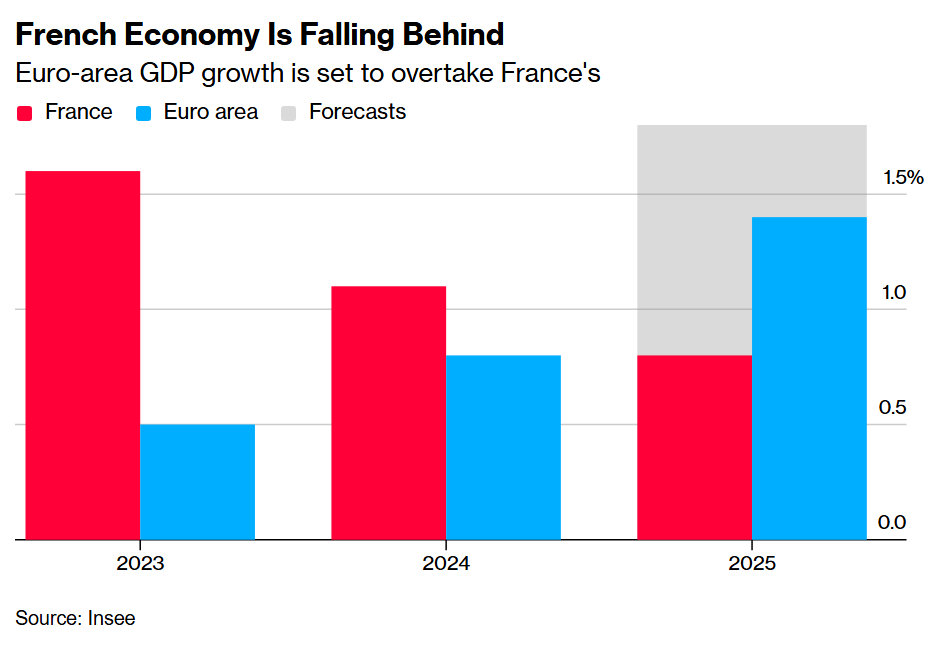
France’s political crisis is eroding an otherwise solid economy, leaving the country trailing the recovery in the rest of Europe.
The latest forecasts from national statistics agency Insee show growth of just 0.8% in 2025 compared to 1.4% in the rest of the euro area, ending two years of French out-performance.
The projection is a slight improvement from the 0.6% expected in June, largely thanks to surprising pockets of resilience in agriculture, tourism, real estate and aeronautical manufacturing, Insee said Thursday.
But economist Dorian Roucher said there has been a persistent decline in consumer confidence since snap elections last year, fears of unemployment are at 10-year highs, and savings rates are breaking records quarter after quarter.
“The French economy stands out from its neighbors with its unique lack of confidence,” he said at a briefing on the latest expectations. “The resulting sluggishness of spending is breaking the stride of French growth.”
The near-term political outlook is unlikely to improve things for the euro area’s second largest economy.
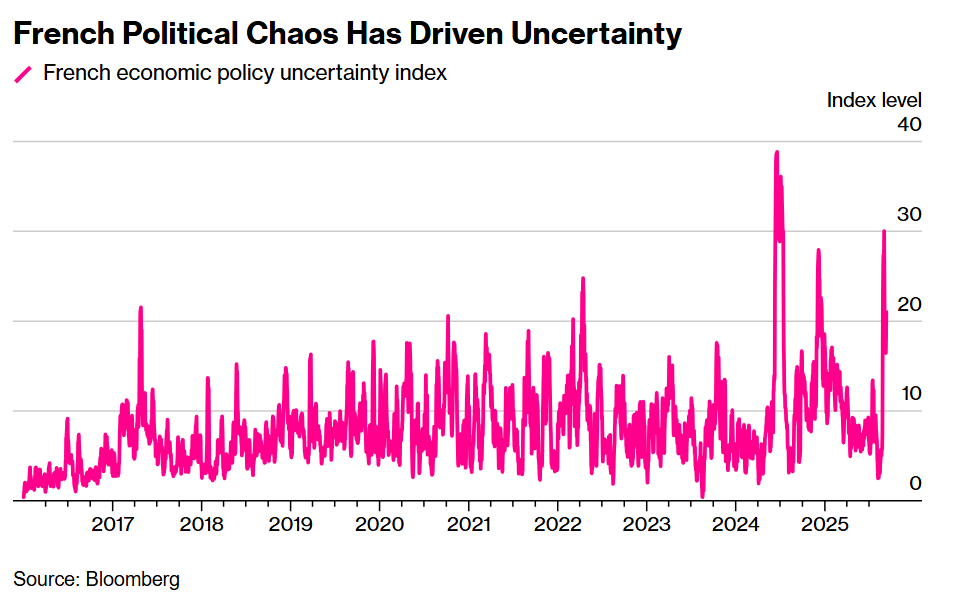
After the second government collapse in less than a year earlier this week, the new prime minister, Sebastien Lecornu, is facing mass protests over budget policy as he tries to build parliamentary support for cuts.
The upheaval has again spooked investors, sparking sell-offs of French assets that are driving up government borrowing costs compared to peers. Opposition parties in the hung parliament have so far shown little inclination to support plans to sharply reduce what has become the euro area’s largest budget deficit.
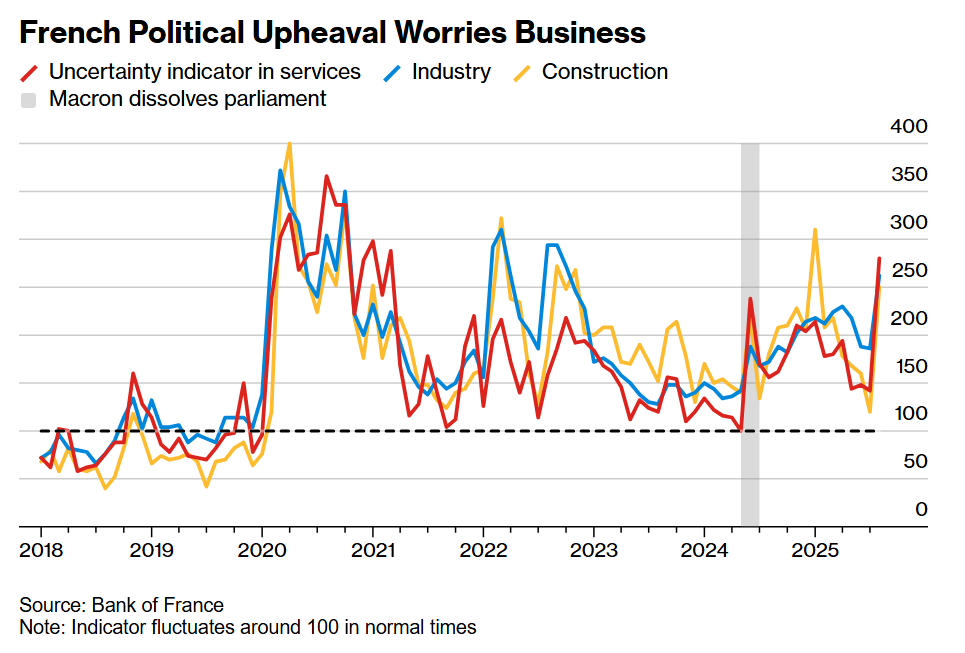
There are also signs that corporate investment is falling and a Bank of France indicator showed a jump in uncertainty among business leaders comparable in magnitude to the spike seen after President Emmanuel Macron called the surprise legislative elections in June last year.
Insee’s Roucher said there that if uncertainty were to intensify, activity could weaken further still.
“But on the flip side, confidence is clearly the missing element for French growth,” he said. “So if it returned it would finally unlock spending behavior.”
Written by: William Horobin @Bloomberg
The post “France’s Political Gloom Crushes an Otherwise Resilient Economy” first appeared on Bloomberg