
A gauge measuring Britons defaulting on credit cards and other unsecured loans has hit its highest level since the financial crisis, a sign of growing pressure on household finances.
The proportion of lenders saying default rates rose over the previous three months outnumbered those reporting declines by 34 percentage points, a survey by the Bank of England showed on Thursday.
It was a sharp increase from 18 points in the first quarter and the highest reading since 2009, with a further increase expected. Defaults on secured loans were little changed, likely reflecting the fact that homeowners in financial difficulty tend to miss mortgage payments as a very last resort.
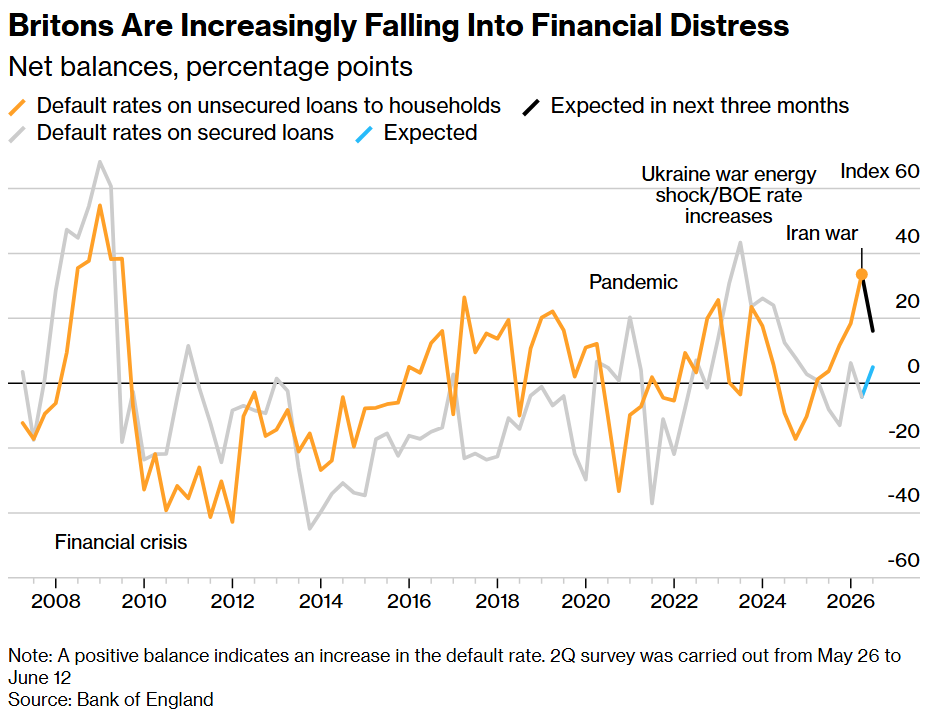
The data laid bare the strain on households at a time of rising unemployment, elevated interest rates and inflation that remains above the BOE’s 2% target. Signs of pressure on their finances will be a concern for policymakers, with consumers already hesitant to spend and economic growth subdued.
However, the US-Iran truce may alleviate some of the strains as energy prices fall and reduced wagers on BOE rate rises allow lenders to cut borrowing costs. The survey was conducted in late May and the first half of June, meaning the impact of the US-Iran deal was not captured.
“Tighter credit conditions, the ongoing impact of the Iran conflict and a cooling labor market triggered a rise in unsecured lending defaults, which is clearly where financial pressure is most acute,” said Karim Haji, UK head of financial services at KPMG. He warned that cost of living and job security concerns will “continue to fuel economic and financial anxiety for many.”
The survey showed UK lenders expected demand for home loans to fall in the coming months after a sharp rise in mortgage rates since the war broke out in late February.
There was little sign of growing pressure on companies with default rates for businesses unchanged in the second quarter. Demand for credit among small and medium-sized businesses was subdued, however.
Written by: Tom Rees @Bloomberg
The post “UK Consumer Loan Default Gauge Jumps to Highest Since 2009” first appeared on Bloomberg