
India’s rupee tumbled to an all-time low against the dollar, with losses accelerating after policymakers surprised traders by choosing not to prop it up as they had been doing for months.
The rupee, which has come under pressure as India struggles to reach a trade deal with the US, fell as much as 0.9% to 89.4812 per dollar. The move quickened after breaching the 89 mark that many dealers and importers assumed the Reserve Bank of India would protect. That sent them rushing to close bets against the dollar in local and offshore markets, according to Anindya Banerjee, a currency strategist at Kotak Securities.
“There was real panic in the market,” said Dilip Parmar, a foreign-exchange analyst at HDFC Securities in Mumbai. “People had been expecting that the RBI will protect the 89 level, but this time it was missing.”
The central bank had been selling dollars in recent weeks in a bid to support the rupee and curb excessive volatility. Those aggressive interventions in mid-October spurred short-term gains in the currency but also depleted rupee liquidity in the banking system and foreign-exchange reserves.
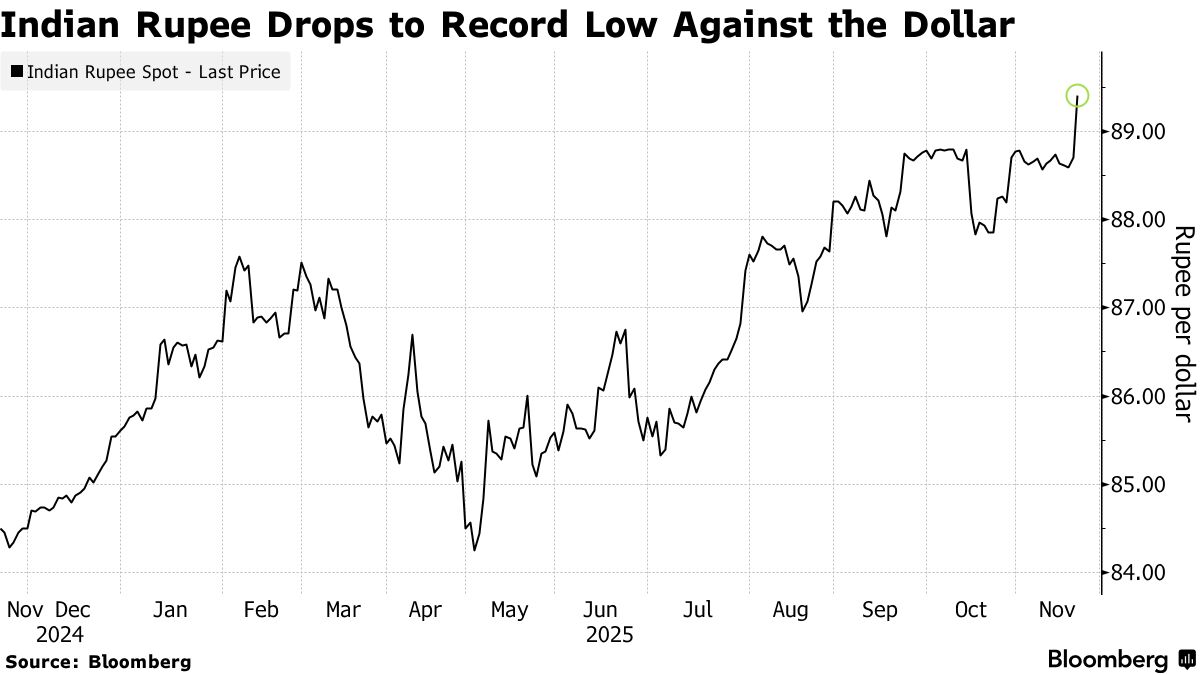
The slump came just a day after RBI Governor Sanjay Malhotra said that pressure on the rupee would ease once the country clinches a “good” trade deal with the US. Foreign-exchange reserves have dropped around $10 billion since mid-September, central bank data showed after market hours on Friday.
A spokesperson for the central bank did not immediately respond to an email seeking comment on the matter.
“The RBI seems to have stepped away from the market amid a building wave of dollar demand,” said Dhiraj Nim, currency strategist at Australia and New Zealand Bank Group. “There is uncertainty over when the trade deal will arrive and as such the RBI may not want to keep defending a level and using reserves.”
Delays in finalizing a trade deal are dampening sentiment, even after India recently suggested an accord was close. The US currently levies 50% tariffs on Indian exports — the harshest among Asian nations.
“It’s not as if there is negative news on the trade deal — it’s the strong dollar demand which pushed the rupee lower in the absence of the central bank,” said Ritesh Bhansali, deputy chief executive officer at Mecklai Financial Services.
The rupee is Asia’s worst-performing currency this year, down 4.3% versus the dollar. For now, ANZ’s Nim sees the rupee stabilizing around 89.40.
Written by: Bhaskar Dutta, Malavika Kaur Makol, and Pratigya Vajpayee — With assistance from Subhadip Sircar @Bloomberg
The post “Indian Rupee Sinks to All-Time Low as RBI’s Absence Sows ‘Panic’” first appeared on Bloomberg